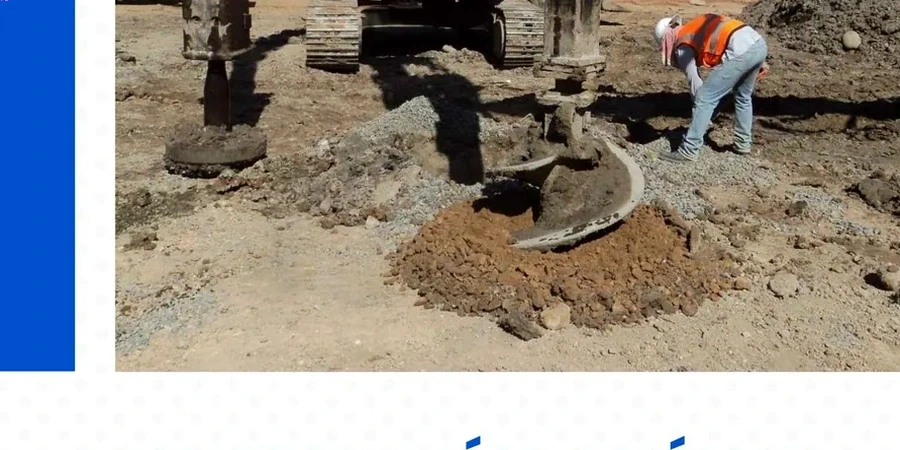
A vibratory probe rig sinks into the alluvial deposits common across San Bernardino, feeding crushed stone column by column. That's the core of what we do. Our geotechnical lab designs these stone column arrays specifically for the soft, compressible soils found throughout the valley — the kind that make shallow footings a gamble. Before the probe ever touches the ground, we're analyzing gradation curves and running settlement projections. The stone column design process ties directly into site-specific data from our CPT testing to map exactly where the weak zones are, and we use triaxial compression tests on the proposed stone fill to confirm stiffness and shear strength. In San Bernardino, where liquefiable layers sit just below the surface in many parcels, getting the column diameter, spacing, and depth right isn't theoretical — it determines whether a warehouse slab stays flat for 30 years or starts cracking in five.
A stone column is only as good as the aggregate that goes into it — gradation, angularity, and placement method determine whether you get densification or just expensive backfill.
How we work
The most frequent mistake we see in San Bernardino is contractors assuming any crushed rock will perform the same way in a stone column. It won't. Angularity matters. Gradation matters. And if the fines content in the native soil exceeds about 15%, you're going to need a different compaction approach or you'll just be pushing mud sideways instead of densifying anything. Our stone column design process starts with a thorough sieve analysis on the proposed aggregate — we run ASTM D6913 and D7928 in-house — and cross-reference that against the native soil's grain size curve. The goal is a filter-compatible column that drains, densifies, and transfers load without the stone punching into the surrounding silt. For deeper deposits, we often specify a bottom-feed vibrator to maintain column integrity through the weak zones. In the San Bernardino area, where groundwater can be shallow in the winter months, we also factor in buoyant unit weights and potential fines migration when the water table rises.
Questions and answers
What does stone column design cost in San Bernardino?
For a typical commercial or industrial project in the San Bernardino area, stone column design fees run between US$1.350 and US$5.820, depending on the treated area, number of columns, and the extent of post-installation verification testing required. Smaller single-lot jobs fall toward the lower end; large warehouse sites needing multiple CPT profiles and plate load tests run higher.
How deep can stone columns go in San Bernardino soils?
Most of our San Bernardino projects target depths between 15 and 60 feet. The alluvial deposits here can extend deeper, but stone columns beyond about 60 feet become less cost-effective compared to alternative deep foundation solutions. We evaluate depth limits case by case based on the CPT data.
How do you verify the stone columns actually worked?
We run CPT soundings at the centroid between columns and compare the tip resistance and sleeve friction to pre-treatment values. We also do plate load tests on individual columns and column groups, plus shear wave velocity measurements when seismic site class improvement is part of the design goal.
Can stone columns handle liquefaction in San Bernardino?
Yes, that's one of the main applications here. The San Bernardino basin has liquefiable layers at relatively shallow depths, and properly designed stone columns act as both drains and densification elements. We design the spacing to achieve the target pore pressure dissipation during a seismic event, following the methodology outlined in FHWA ground improvement guidelines.