← Home · In-Situ Testing

Field Permeability Testing (Lefranc & Lugeon) for Geotechnical Projects in San Bernardino

Together, we solve the challenges of tomorrow.

LEARN MORE →

San Bernardino sits at an elevation just over 1,000 feet on a massive alluvial fan where the Santa Ana River spills out of the San Bernardino Mountains, and this geology makes understanding in-situ hydraulic conductivity a non-negotiable step before any deep foundation or water-retaining structure is designed. The 2015 Veterans Parkway detention basin project reshaped how local civil engineers approach groundwater — it highlighted that textbook permeability values for sandy gravels rarely match what you actually measure in the field when cobbles and fines are interbedded. Our field permeability testing program applies the Lefranc method in shallow boreholes and the Lugeon test in fractured rock, delivering ASTM D6391-compliant data that geotechnical engineers use to size dewatering systems, verify cutoff wall effectiveness, and calibrate seepage models. Whether your site is near the Shandin Hills with its decomposed granite or down in the basin where groundwater can be encountered at less than 15 feet, the in-situ permeability testing protocol we run captures the anisotropy that lab tests on remolded samples simply miss. For projects where foundation design hinges on accurate drainage assumptions, pairing these results with a grain size analysis helps distinguish between matrix-controlled and fracture-controlled flow regimes.

A Lugeon value of less than 1 in San Bernardino's granitic basement rock often indicates a groutable foundation, but values above 5 in the overlying alluvium demand a dewatering plan before excavation reaches design grade.

How we work

The transition from the mountain front to the valley floor creates a hydraulic gradient that surprises contractors who only rely on desktop studies: coarse alluvium can transmit water at rates exceeding 1×10⁻² cm/s while interbedded clay lenses in the same borehole drop conductivity by three orders of magnitude. Our field crews deploy double-packer systems for Lugeon testing in the fractured metamorphic and granitic rock that underlies the campus expansion zones near Cal State San Bernardino, running five pressure stages per test interval to differentiate between laminar flow, turbulent flow, dilation, and washing out of fracture infill — the classic Houlsby interpretation that every dam safety reviewer expects to see in the report appendix. In soil boreholes we use both constant-head and falling-head Lefranc configurations depending on the anticipated permeability range, with the falling-head method proving particularly efficient in the silty sands found across the former citrus grove parcels being converted to logistics centers. The data package includes QA/QC logs with barometric efficiency corrections, temperature compensation, and time-drawdown plots. For projects located near the San Jacinto fault zone where groundwater barriers can create perched conditions, we often recommend supplementing the permeability profile with a seismic refraction survey to map the bedrock surface and identify paleochannels that act as preferential flow paths beneath proposed building pads.
Field Permeability Testing (Lefranc & Lugeon) for Geotechnical Projects in San Bernardino
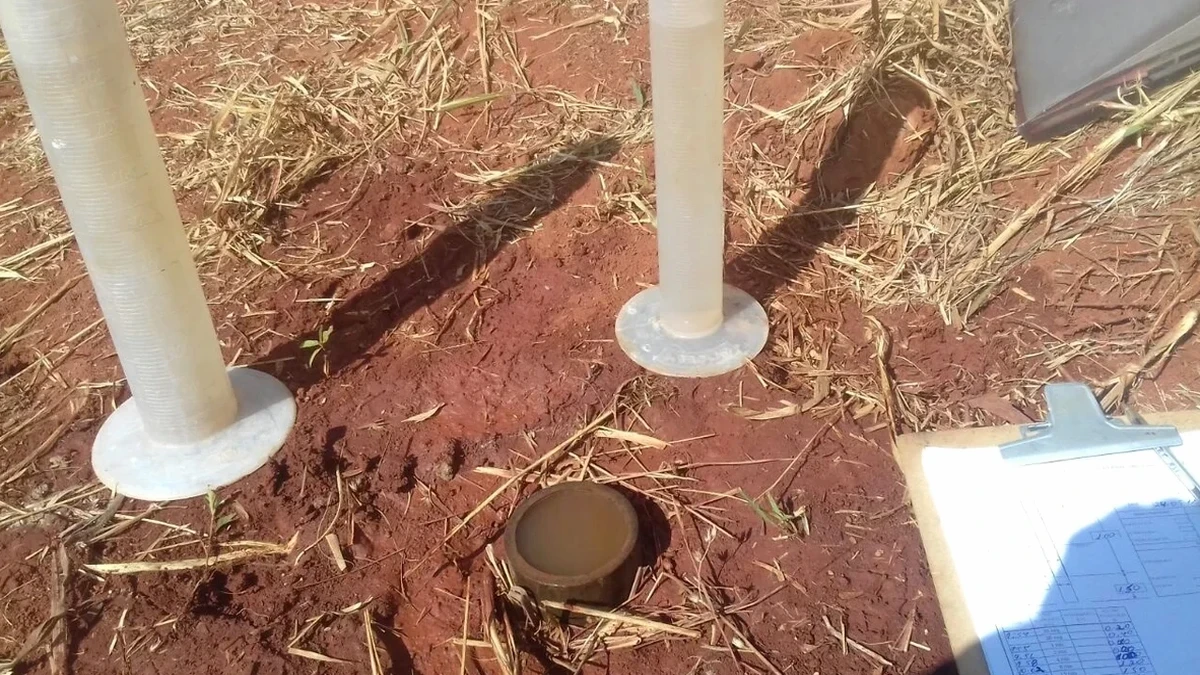
Technical reference image — San Bernardino

Site-specific factors

The San Bernardino basin contains a complex groundwater system where the Bunker Hill Basin and the Rialto-Colton Basin interact across fault-controlled subsurface ridges, and a site on one side of the barrier can have a water table 30 feet higher than a parcel half a mile away. Excavating a mat foundation or a deep basement without measured field permeability data in this setting risks catastrophic blowout during dewatering or — worse — long-term buoyancy issues after construction if the drainage system was undersized based on assumed soil parameters. The Santa Ana River's historic floodplain deposits include openwork gravel channels that function as underground conduits; a Lugeon test that returns a value exceeding 25 in these zones signals that conventional sump pumping will be inadequate and a wellpoint system or deep well array must be designed using the actual hydraulic conductivity, not a regional average. Retaining walls and shoring systems excavated below the water table in permeable alluvium also face piping and internal erosion risks at the toe, which is why the IBC requires site-specific geotechnical investigation including in-situ permeability for any permanent dewatering design. San Bernardino's seismic setting — with the San Andreas and San Jacinto faults both within 15 miles — adds the dimension of liquefaction-induced pore pressure redistribution, where a low-permeability silt lens can trap excess pressure and cause delayed ground failure even after shaking stops. Field permeability testing identifies these confining layers so the engineer can model dissipation times and decide whether stone columns or prefabricated vertical drains are warranted.

Need a geotechnical assessment?

Reply within 24h.

Email: info@geotechnicalengineering1.biz

Technical parameters

ParameterTypical value
Test Standard (Soil)ASTM D6391-11 (Lefranc constant/falling head)
Test Standard (Rock)Lugeon double-packer method per Houlsby interpretation
Borehole DiameterNX to HQ (76–96 mm) for packer seating
Test Interval Length3 to 5 meters typical; 1 meter in fractured zones
Pressure Stages (Lugeon)5-stage cycle: Pmin→Pmax→Pmin per EN ISO 22282-3
Measurable k Range1×10⁻⁷ m/s to 1×10⁻² m/s
Reporting DeliverablesLugeon values, hydraulic conductivity (k), transmissivity, packer seating verification

Associated technical services

01

Lefranc Borehole Permeability

Constant-head and falling-head tests in soil boreholes drilled through alluvial fan deposits, providing hydraulic conductivity values for dewatering design, infiltration basin sizing, and groundwater modeling across San Bernardino basin sites.

02

Lugeon Packer Testing in Rock

Double-packer water pressure tests in fractured crystalline and metamorphic rock, with full Houlsby interpretation of five-stage pressure cycles for dam foundations, tunnel alignment investigations, and grouting design.

03

Dewatering Feasibility Assessment

Integrated analysis combining field permeability data with groundwater monitoring to recommend dewatering methodology — wellpoints, deep wells, or cutoff walls — and predict drawdown radius and construction settlement impacts.

Reference standards

ASTM D6391-11 — Standard Test Method for Field Measurement of Hydraulic Conductivity Using Borehole Infiltration, IBC 2024 Section 1803 — Geotechnical Investigations requiring in-situ permeability for dewatering design, ASCE 7-22 Chapter 21 — Site-Specific Ground Motion and Liquefaction Assessment

Questions and answers

How much does a field permeability test cost for a San Bernardino site?

Field permeability testing in San Bernardino typically ranges from US$620 to US$1,180 per test interval depending on depth, borehole conditions, and whether a Lefranc or Lugeon setup is required. A complete program with multiple intervals and packer deployment in rock generally falls on the higher end. We provide a fixed-price proposal after reviewing the geotechnical investigation plan and site access constraints.

When is a Lugeon test required instead of a Lefranc test?

The Lugeon test is specified when the investigation encounters fractured rock, such as the granitic basement beneath San Bernardino's alluvial cover. It uses an inflatable packer system to isolate specific fracture zones and measures water take at multiple pressures. This is the standard method for dam abutment investigations, tunnel alignment studies, and any project where rock mass groutability must be assessed per the Houlsby criteria.

How long does it take to get permeability test results?

Fieldwork for a single Lefranc test at one depth typically requires one to two hours of borehole time, not including drilling. Lugeon tests with five-stage pressure cycles take longer — roughly two to four hours per interval depending on water take rates. We deliver preliminary k values within 24 hours of test completion and the final signed report with interpretation plots within five business days.

Can field permeability tests be combined with SPT sampling in the same borehole?

Yes, this is standard practice. The borehole is advanced with SPT sampling to log stratigraphy and collect disturbed samples, and then the permeability test is conducted at predetermined depths after cleaning the hole. In San Bernardino's interbedded alluvium, we typically run Lefranc tests immediately below clay seams identified during sampling, since those interfaces control perched groundwater behavior that affects excavation stability.
Location and service area

We serve projects in San Bernardino and surrounding areas.

View larger map