← Home · Investigation

SPT Standard Penetration Test in San Bernardino – Reliable N-Value Data

Together, we solve the challenges of tomorrow.

LEARN MORE →

Specifying shallow foundations without verified SPT data is a recurring and costly gamble in San Bernardino. The city sits atop deep alluvial deposits washed down from the San Bernardino Mountains, where loose sands and unpredictable gravel lenses create sudden vertical changes in bearing capacity. A project near the 215 freeway recently halted for weeks because the geotech report relied on regional assumptions instead of site-specific blow counts. Our team drills the Standard Penetration Test to refusal or depth, recording N-values every 2.5 feet and retrieving split-spoon samples that get logged immediately. When loose zones appear above the water table, we often recommend supplementing the data with a CPT test to resolve thin strata that the SPT sampler might miss. For sites with deeper gravel, combining the SPT with MASW clarifies the shear wave velocity profile across the entire soil column.

In San Bernardino's alluvial fans, a 10-foot change in depth can shift N-values from 8 to 45—SPT data without energy correction is just a number.

How we work

The post-war expansion of San Bernardino transformed citrus groves into dense residential and commercial tracts, but the underlying soils never changed. Much of the city is built on young Quaternary alluvium—interbedded silts, sands, and cobbles that defy uniform classification. The SPT remains the benchmark for characterizing these deposits because it recovers a disturbed sample while measuring penetration resistance. We use automatic trip hammers calibrated to ASTM D1586 energy standards, eliminating the rod energy losses common with older cathead systems. In the coarse fan deposits north of Highland Avenue, blow counts often spike above 50 within 15 feet, signaling dense material that can support a mat foundation without deep piles. Our lab then runs sieve analyses on the recovered samples, cross-referencing results with the grain size distribution to confirm gravel content and fines percentage. Every borehole log includes groundwater observations recorded 24 hours after drilling.
SPT Standard Penetration Test in San Bernardino – Reliable N-Value Data
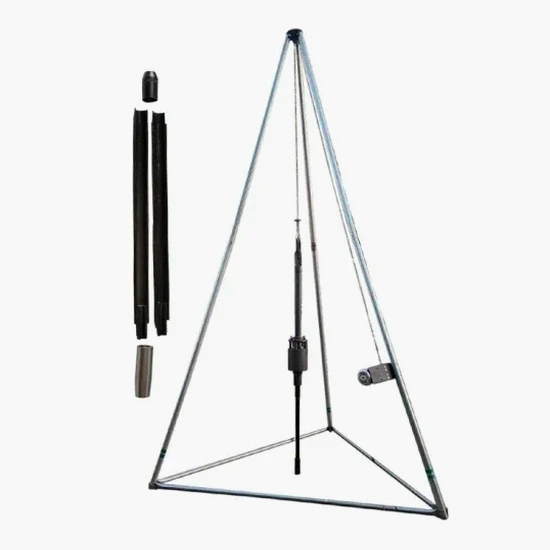
Technical reference image — San Bernardino

Site-specific factors

At 1,049 feet elevation, San Bernardino sits within a seismically active corridor where the San Jacinto and San Andreas faults intersect regional stress fields. The 1989 Loma Prieta event and closer ruptures on the San Jacinto fault have repeatedly demonstrated that saturated granular soils in the Inland Empire can lose strength under cyclic loading. Standard penetration resistance is the first screening tool for liquefaction susceptibility: N-values below 15 in clean sands within 50 feet of the surface demand further analysis per the Seed-Idriss simplified procedure. In the Waterman Canyon outwash zone, we have logged loose saturated lenses at 20 to 35 feet that would trigger mandatory liquefaction assessment under IBC Chapter 18. Ignoring these layers during a routine investigation leaves the structural engineer without the data needed to specify ground improvement. The SPT log becomes the legal record documenting that due diligence was performed.

Need a geotechnical assessment?

Reply within 24h.

Email: info@geotechnicalengineering1.biz

Technical parameters

ParameterTypical value
Hammer typeAutomatic trip (safety hammer)
SamplerStandard 2-inch OD split spoon
Drive weight140 lb (63.5 kg)
Drop height30 inches (760 mm)
Seating drive6 inches, blow count recorded separately
Test drive12 inches, N-value = blows/foot
Borehole diameter4 to 8 inches, stabilized with mud rotary in caving soils

Associated technical services

01

Borehole Logging and Sampling

Every SPT run produces a 24-inch sample that we log immediately on site. The field engineer records moisture, color, consistency, and USCS classification, then packages the material for laboratory index testing if required.

02

Energy-Corrected N60 Reporting

Raw N-values are corrected for hammer energy ratio, rod length, borehole diameter, and overburden pressure. The resulting N60 values feed directly into settlement calculations and liquefaction triggering correlations.

Reference standards

ASTM D1586-22: Standard Test Method for Standard Penetration Test (SPT) and Split-Barrel Sampling of Soils, ASTM D2487-17: Standard Practice for Classification of Soils for Engineering Purposes (Unified Soil Classification System), IBC 2024: Section 1803 – Geotechnical Investigations, ASCE/SEI 7-22: Minimum Design Loads and Associated Criteria for Buildings and Other Structures

Questions and answers

What is the typical cost of an SPT investigation in San Bernardino?

For a single borehole with SPT sampling at 5-foot intervals, costs in the San Bernardino area generally range from US$620 to US$850. The final figure depends on total depth, access constraints, and whether mud rotary drilling is needed through caving soils.

How deep do you drill SPT boreholes for a standard commercial building?

Depth depends on footing dimensions and the site's subsurface profile. We typically advance boreholes to a minimum of 30 feet below grade, or until refusal on dense gravel or bedrock. Larger structures with concentrated column loads may require depths exceeding 50 feet.

Can the SPT distinguish between clay and silt layers?

The split spoon recovers a disturbed sample, so visual classification in the field gives a preliminary identification. Definitive differentiation between silt and clay requires laboratory Atterberg limits testing on the recovered material.

Do you handle traffic control and permits for SPT drilling on city streets?

We coordinate directly with the City of San Bernardino Public Works Department for encroachment permits and arrange certified traffic control when boreholes are located within the public right-of-way.
Location and service area

We serve projects in San Bernardino and surrounding areas.

View larger map